

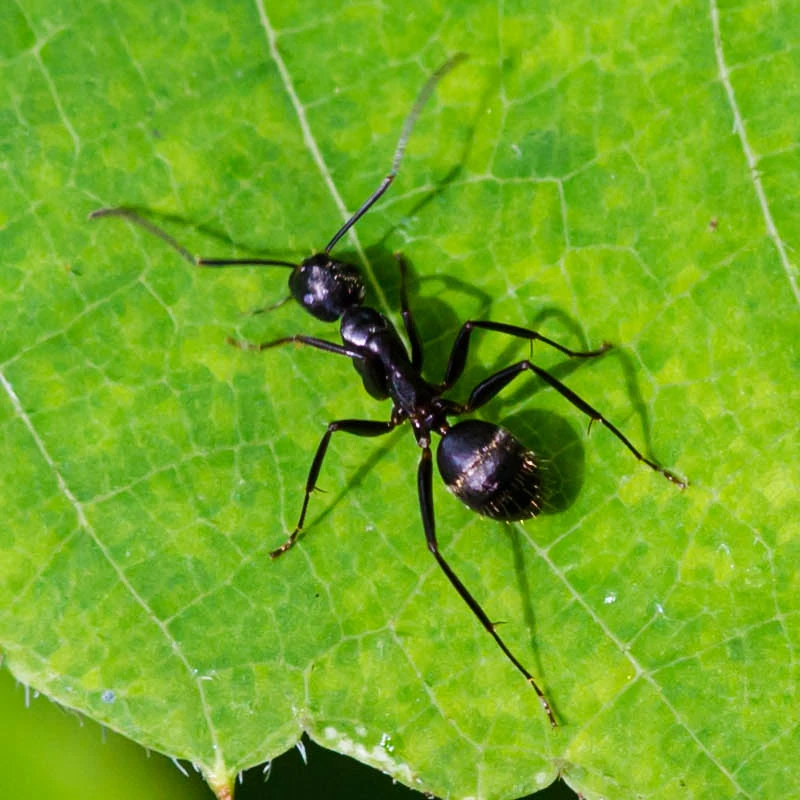
Melissa McMasters · CC BY 2.0 · Cropped and resized.
Ants with and without wings
The reference photo shows one carpenter ant, not every kind of ant. Workers do not have wings; reproductive ants may have wings and can be confused with termite swarmers. Exact ant identification may need a closer look than one photograph provides.
Illustrated identification comparison
Termite swarmer or winged ant?
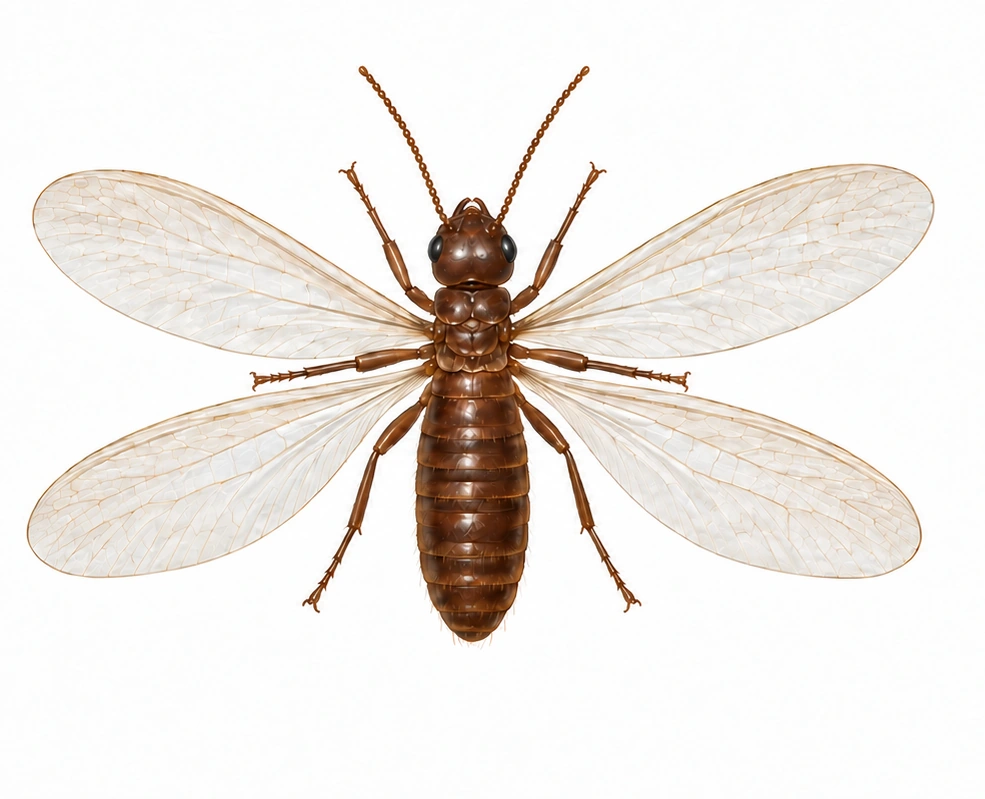
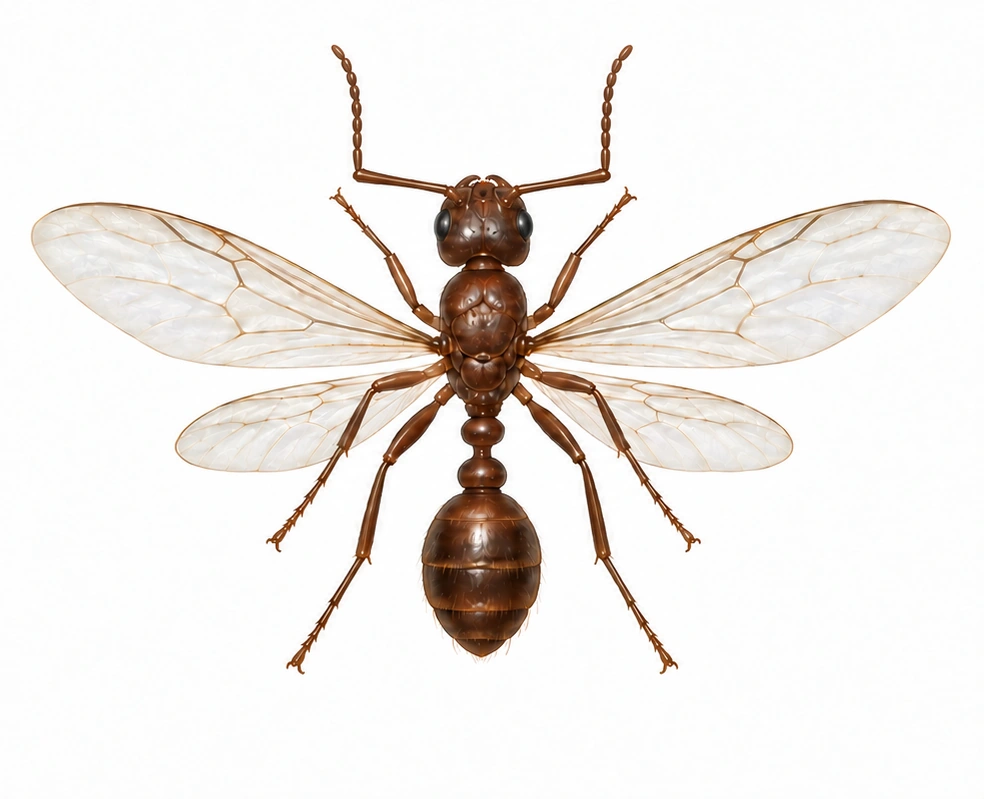
Not shown to scale. These simplified illustrations show distinguishing features; they are not photographs or an exact representation of every species.
Termite swarmer
- Antennae
- Relatively straight
- Waist
- Broad, less constricted
- Wings
- Front and rear pairs broadly similar in size
Winged ant
- Antennae
- Elbowed
- Waist
- Narrow, constricted
- Wings
- Front wings larger than rear wings
Original illustration created for Orange Mango. Morphology reference: Missouri Department of Conservation’s termite guide. This is educational artwork, not field evidence.
Still not sure what you’re seeing?
You do not need to identify the insect yourself. For suspected termite activity, Orange Mango offers a free termite inspection/evaluation; you do not need to be certain you have termites. The free evaluation does not include an NPMA-33 report. Real-estate and formal WDI/NPMA-33 inspections and reporting are a separate paid service.
For ant activity, explore Ant Control. If termite evidence is a concern, see the Termite guide.
Which ant clues are useful?
| Concern | What to record |
|---|---|
| Small household ants | Photograph a worker and its trail; note food, water and the apparent entry point. |
| Possible carpenter ants | Larger workers and activity near wood deserve identification. Carpenter ants excavate nesting space; they do not eat wood like termites. |
| Winged insects indoors | Record where they emerged and compare the features above before selecting a service. |
Color alone cannot separate many small ant species. UC IPM’s identification guide describes odorous house ants, pavement ants and carpenter ants; a close, clear image or inspection may be needed.
Signs of ant activity
Ant trails often show up along baseboards, counters, windowsills and exterior edges. Watch for a repeated line of small insects traveling between a food or moisture source and a crack, trim edge or utility opening. Carpenter ants are larger and are often associated with damp or damaged wood, while pavement and odorous house ants commonly trail near kitchens and foundations.
Why ants enter a home
Ant activity can rise after heavy rain, landscaping changes or a shift in available food and water. In Mid-Missouri, small gaps around utility lines, door thresholds and window frames can give foraging ants a route indoors. Seeing a few ants does not always reveal where the colony is, which is why finding the travel route matters.
First steps to reduce ant activity
Wipe up food residue, keep pantry items sealed, repair active moisture issues and make a note of the rooms and times you see activity. Avoid spraying a trail at random; it can make it harder to follow the pattern and identify the species.
When to request an ant inspection
Schedule an inspection when trails keep returning, activity appears in more than one room, or you suspect carpenter ants around moisture-damaged wood. Orange Mango can assess the activity and recommend a targeted plan for the property.
Ants: common questions
Why do ants suddenly appear in my kitchen?
A new food or water source, weather change or opening into the building can make a kitchen part of an ant’s travel route.
Are carpenter ants the same as termites?
No. Both can be associated with wood concerns, but they are different insects and need a proper inspection.
Information on this page is educational and does not replace a property inspection, medical advice or public-health guidance.
Explore ants service