

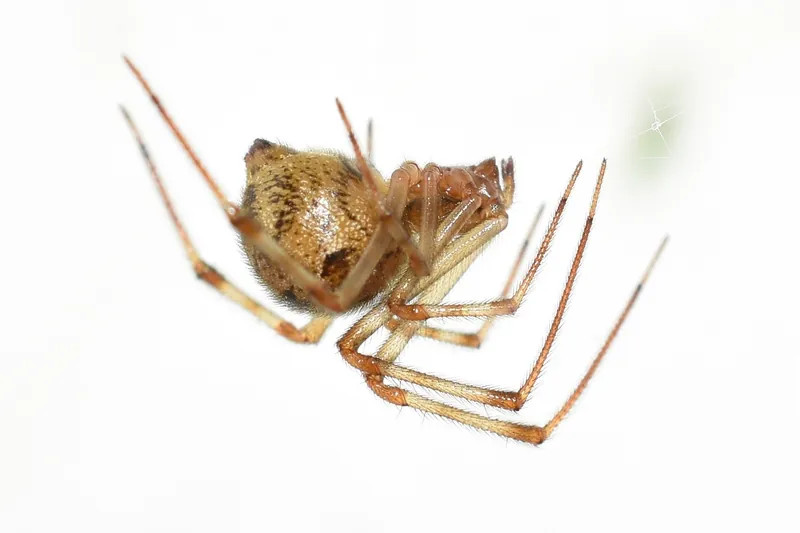
Daniel.fox123 · CC BY 4.0 · Resized.

What to look for
Spiders have eight legs and two main body sections, with no wings or antennae. Shape, size and markings vary widely. This photograph shows one example; matching its color alone cannot identify another spider or establish whether it is medically important.
Can you identify a brown recluse by its color?
No. Several spiders are brown, and a violin-like mark alone is unreliable. Recluse identification considers multiple features, including six eyes arranged in three pairs; that detail often cannot be resolved in an ordinary photo. Do not handle a spider to check.
| Group | Useful distinction |
|---|---|
| Brown recluse concern | Ask for identification when repeated indoor sightings worry you. A blurry photograph or a skin mark cannot confirm the spider. |
| Wolf spiders | Often ground hunters with hairy legs; they do not use a prey-catching web like an orb weaver. |
| Orb-weaving spiders | A round, wheel-like web is a useful clue to the group, rather than proof of a species. |
| House spiders | Web location and body details can help; the representative photo on this page is not a brown recluse identification chart. |
Identification reference: University of California IPM spider guide. Its California distribution notes should not be applied to Missouri. For a suspected bite or symptoms, contact a healthcare professional.
Spider sightings and web patterns
Spiders are often found in quiet, undisturbed places: storage areas, basements, garages, exterior lights, window wells and eaves. Webs, egg sacs and repeated sightings in the same corners can point to resting spots. Most spiders are beneficial predators outdoors, but recurring indoor activity may signal that insects and shelter are available nearby.
What draws spiders to a property
Clutter, insects attracted to exterior lights, gaps around screens and doors, and undisturbed storage areas all create opportunities. In the Ozarks and central Missouri, people sometimes worry about brown recluse spiders. Color or a marking alone is not a reliable way to identify any spider, so avoid handling unfamiliar spiders.
Practical steps around webs and hiding places
Reduce stored clutter, check door sweeps and window screens, vacuum accessible webs and take a clear photo from a safe distance if possible. Keep hands out of dark gloves, boxes and stored items until they are checked.
When to request a spider inspection
Reach out for repeated indoor sightings, activity around sleeping or work areas, or if you are concerned about a potentially medically important spider. An inspection can focus on entry points, harborage areas and the insects that may be drawing spiders in.
Spiders: common questions
Should I handle a spider to identify it?
No. A photo taken from a safe distance is safer and often enough to start a conversation.
Why do I see more spiders in the fall?
Seasonal weather and changes in shelter or prey can make spiders more noticeable around homes.
Information on this page is educational and does not replace a property inspection, medical advice or public-health guidance.
Explore spiders service