

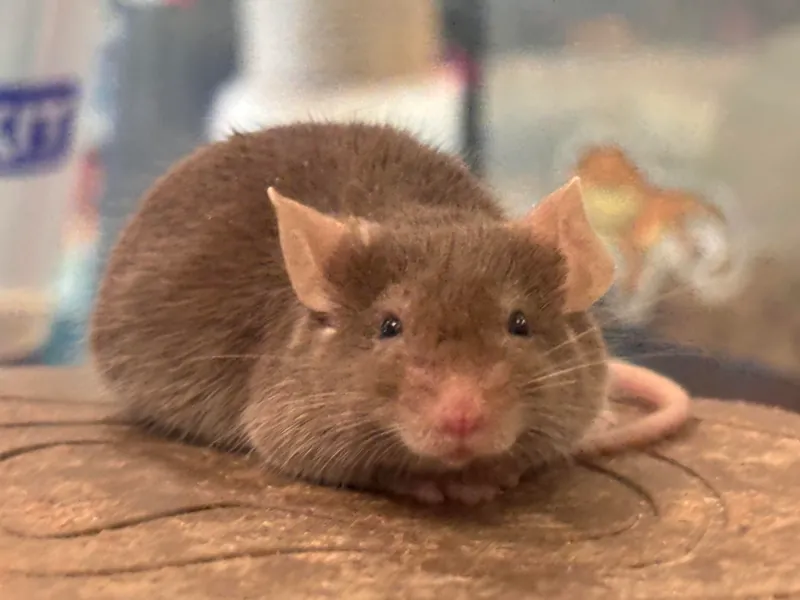
DiegoDiegoDiego555 · CC BY-SA 4.0 · Resized.

What to look for
Mice are small, furry rodents with rounded ears, whiskers and a long tail. Rats are generally larger, but size alone can mislead, especially with young animals. This mouse photograph is a reference, not proof of which rodent left a sign at your property.
Mouse or rat: what can you compare?
Overall proportions can help more than size alone: a young rat can be mistaken for a mouse. Record what you saw without handling the animal or contaminated material.
| Clue | House mouse | Norway rat |
|---|---|---|
| Build | Small body, relatively prominent ears | Heavier build and a blunter muzzle |
| A young animal | Size alone can mislead | Young rats can have noticeably large heads and feet relative to the body |
| Evidence to report | Location, timing, gnawing and damaged packaging | Location, timing, gnawing and damaged packaging |
References: UC IPM’s house mouse and rat identification guides. This comparison is not a complete list of Missouri rodents.
Do not sweep or vacuum droppings or nesting material. Follow CDC cleanup instructions; heavy contamination can require additional precautions. Orange Mango provides interior and exterior baiting. That service does not replace cleanup guidance; trapping, removal, exclusion and repairs are not included.
Rodent signs worth reporting
Rodent activity may show up as droppings, gnaw marks, rub marks along edges, disturbed insulation, sounds in walls or repeated sightings near garages and exterior equipment. Note where and when you noticed the signs, including damaged food packaging or nesting material, without touching or moving potentially contaminated items. One sign or a sound alone does not identify a mouse or rat. Mice and rats can use surprisingly small openings around doors, vents and utility penetrations.
Food, shelter and rodent access
Accessible food, pet food, birdseed, trash, stacked materials and exterior shelter can all support activity near a building. Cooler weather can make protected spaces more attractive. The goal is to understand where activity is occurring and how it is getting close to the structure.
First steps around food and storage
Secure food and trash, avoid leaving pet food outdoors, keep vegetation and stored items from pressing against the building, and note openings around utilities or doors. Do not handle droppings or disturb potentially contaminated nesting materials to gather evidence. Use current public-health guidance for cleanup questions.
For health and safe-cleanup information, see CDC guidance on cleaning up after rodents. Orange Mango’s rodent baiting service does not replace public-health guidance.
When to request a rodent inspection
Orange Mango includes interior and exterior rodent baiting in all Mango plans, with placement and scope based on inspection and the affected areas. Orange Mango does not provide rodent trapping, removal, exclusion or repair work. Tell us about indoor signs too: their location helps us inspect the affected areas and discuss appropriate baiting placement. We can discuss possible entry or repair needs so you understand the next step, but we do not carry out exclusion or repairs.
Rodents: common questions
Can mice get into a house through a small gap?
Yes. Small gaps around doors, pipes and utility lines can be enough for mice.
Do you provide interior rodent baiting?
Yes. All Mango plans include interior and exterior rodent baiting. Report indoor activity so we can inspect the affected areas and discuss placement. Baiting coverage does not include trapping, removal, exclusion or structural repair work.
Information on this page is educational and does not replace a property inspection, medical advice or public-health guidance.
Explore rodents service