

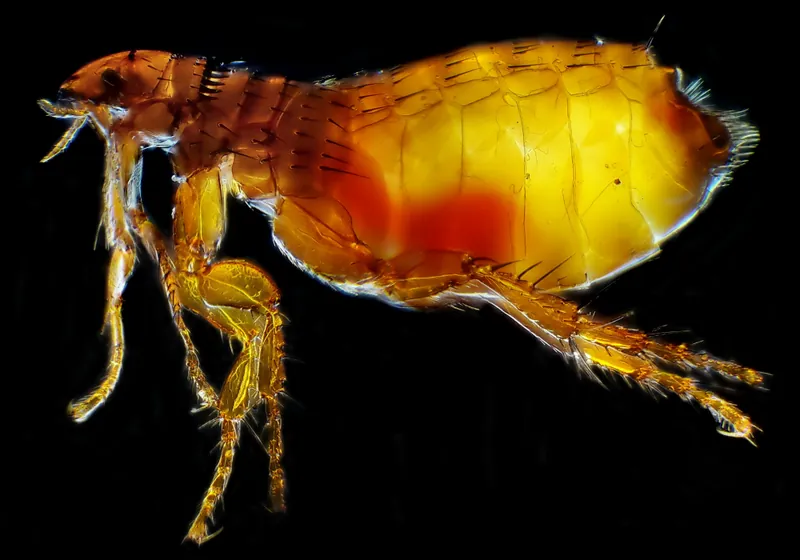
Andrei Savitsky · CC BY 4.0 · Resized.

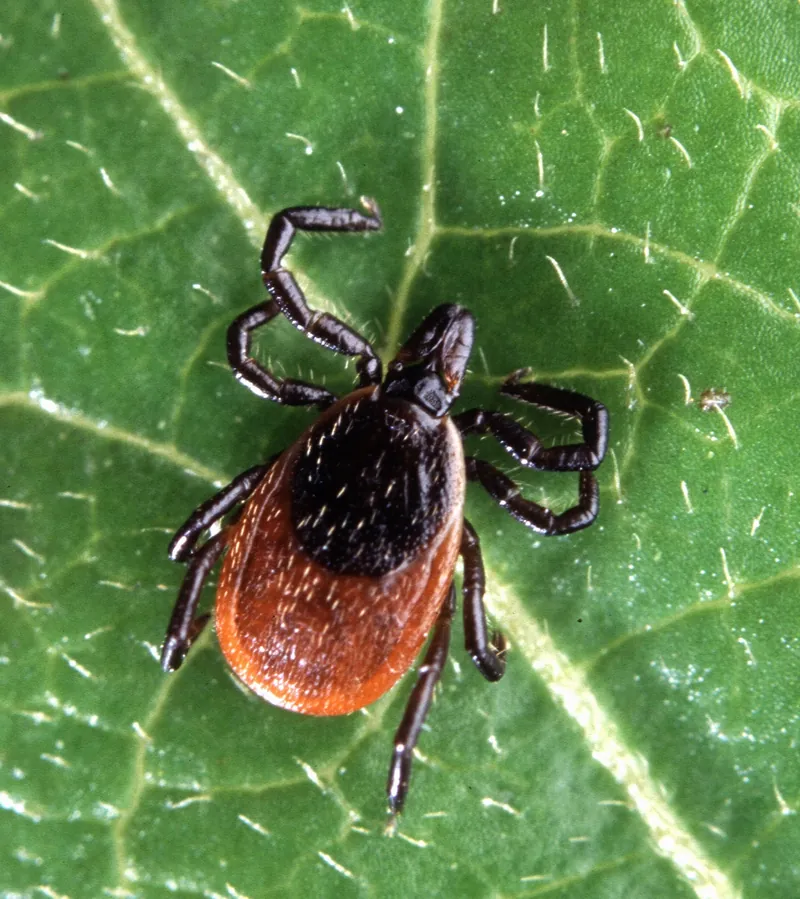
Scott Bauer / USDA ARS · Public domain · Resized.

What to look for
Fleas are small, wingless insects with bodies flattened from side to side and large hind legs for jumping. Ticks have rounded bodies; nymphs and adults have eight legs, while larvae have six. These enlarged photographs are not to scale. Neither a bite nor a matching color alone identifies the pest.
Which ticks are found in Missouri?
Missouri Department of Conservation identifies lone star, American dog and blacklegged ticks among the species people commonly encounter in Missouri. The tick photo above shows an adult blacklegged tick, not all three species. Activity is often highest from April through July, but ticks can be encountered at other times of year.
Fleas and ticks need different first steps
Separate the pest you have actually seen from itching or a suspected bite. Describe whether the concern involves a pet, indoor resting areas or time outdoors; neither a skin mark nor scratching confirms identification.
| Situation | Next step |
|---|---|
| Fleas suspected on a pet | Ask your veterinarian about pet care; tell us about affected rooms and resting areas. |
| Flea activity in the home | Discuss coordinated property preparation and follow-up rather than moving belongings from room to room. |
| A tick found after time outdoors | Follow current CDC tick-removal and health guidance; note where the exposure may have happened. |
| Yard treatment requested | Identify the areas used by people and pets. Mosquito coverage does not automatically include tick service. |
Ticks wait on vegetation and attach to a passing host; they do not jump or fly. Read CDC’s tick guidance and CDC’s flea information. Questions about symptoms or animal treatment belong with your healthcare professional or veterinarian.
Recognizing flea and tick concerns
Flea concerns often start with pets scratching, bites around ankles or activity in pet resting areas. Tick concerns may be noticed after time in tall grass, leaf litter or brushy edges. Neither pest should be identified solely by a bite; a specimen or clear photo can sometimes help, and health questions should go to a medical professional or veterinarian.
Pets, wildlife and outdoor habitat
Pets, wildlife, shaded vegetation and outdoor resting areas can all contribute. Fleas may need coordinated attention to the pet, interior resting areas and exterior conditions. Ticks are often linked to brush, leaf litter and the transition zone between lawn and woods.
Coordinate property preparation and pet care
Talk with your veterinarian about pet protection, wash pet bedding as directed, vacuum frequently used pet areas and keep grass and brush managed. Check yourself, children and pets after time outdoors, and follow public-health guidance for tick removal.
When to discuss flea or tick treatment
Contact us with the areas where activity is occurring and whether pets, indoor spaces or yard edges are involved. Preparation and follow-up depend on the pest and property conditions.
Fleas & ticks: common questions
Can fleas live in a yard?
Yes. Shaded, protected areas visited by animals can support flea activity.
Are all ticks dangerous?
Not all ticks carry disease, but it is wise to follow current public-health guidance after a bite.
Information on this page is educational and does not replace a property inspection, medical advice or public-health guidance.
Explore fleas & ticks service